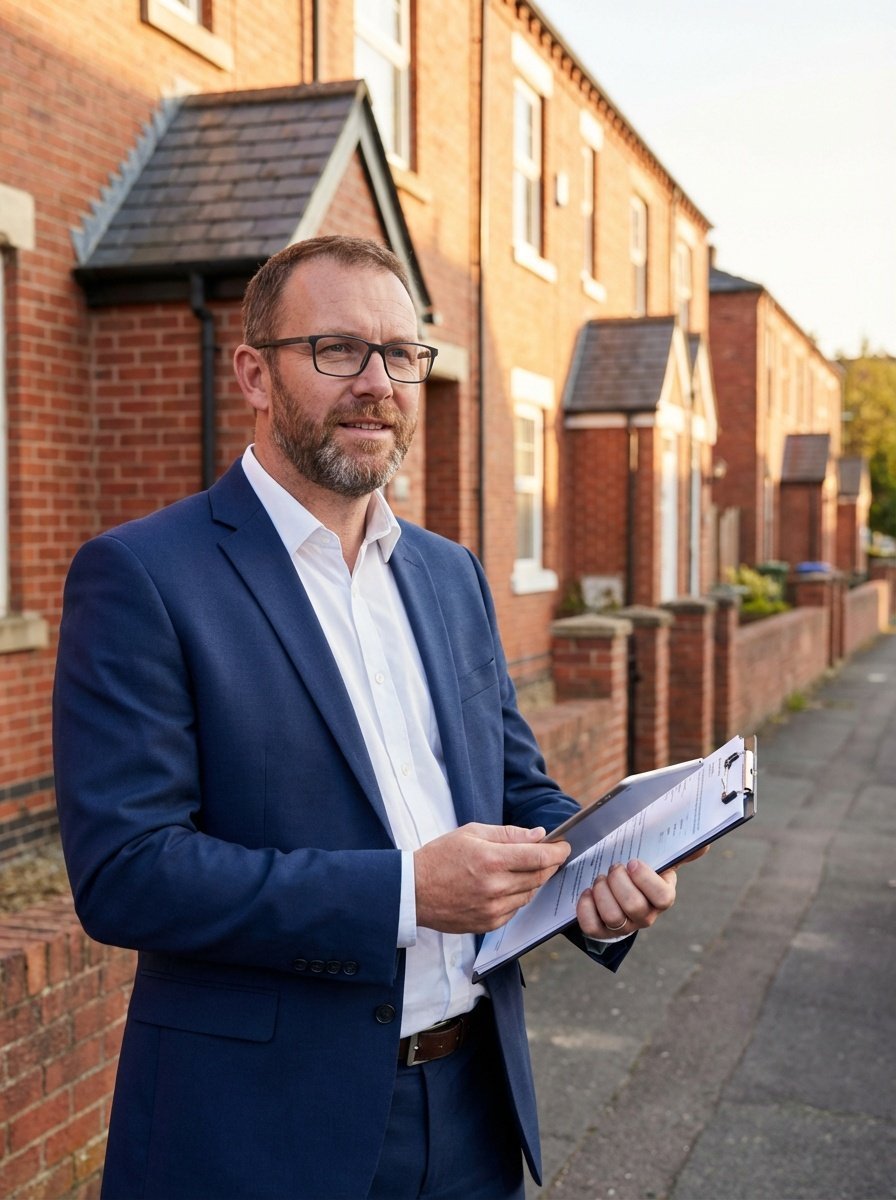
One of the things that surprises many clients is just how much time a thorough survey takes. People sometimes imagine a brief walk-through with a clipboard, but a proper building survey in Bolton is far more thorough than that. Let me walk you through exactly what I do during a typical inspection day — because the more you understand the process, the more you'll get out of the resulting report.
Before I Arrive: Preparation and Background Research
Before I set foot in the property, I've already done some preparation. I'll review any information you've provided — property type, age, lease details for flats, and any specific concerns you've mentioned. I'll also look at available mapping data to check for drainage, flood risk, and any obvious environmental concerns in the area.
The External Inspection
I start outside. Working methodically around the building, I inspect:
- Roof covering: Condition of tiles, slates, flashings, ridges, hips and valleys. I use binoculars and, where accessible, a drone camera for pitched roofs.
- Chimneys: Pointing, flaunching, pots, flashings.
- External walls: Brickwork condition, pointing, render, cracks, damp staining.
- Windows and doors: Condition, fit, sealing, glazing.
- Gutters and downpipes: Condition, joints, falls, discharge points.
- Ground levels: Whether they bridge the DPC and could contribute to damp.
- Boundaries, paths and drainage: Condition, any signs of subsidence or drainage issues.
The Internal Inspection
Inside, I work through the property systematically — usually top to bottom. For a typical three-bedroom semi, this involves inspecting:
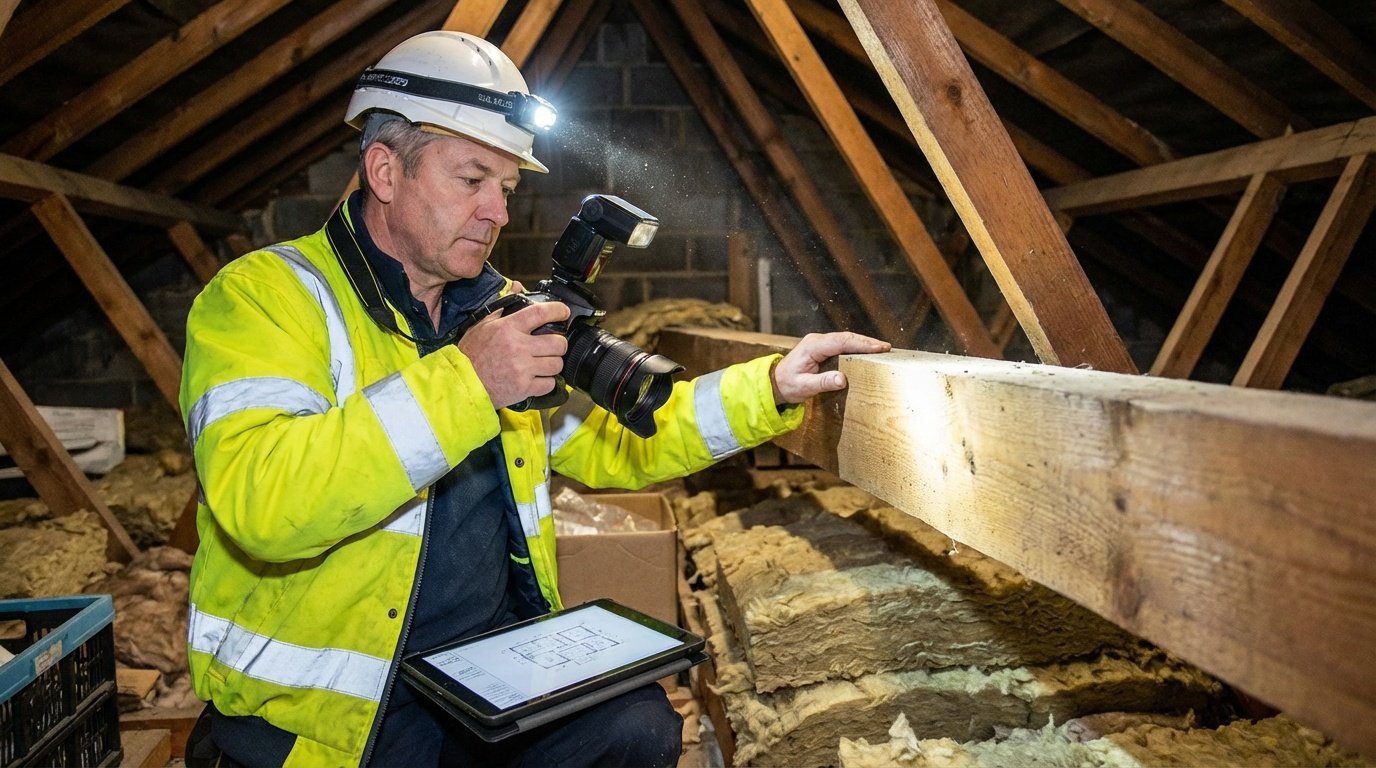
- Loft space: I always access the loft if it's safe to do so. I'm looking at the roof structure (rafters, purlins, ridge board), insulation, any signs of water ingress, and whether the loft has been converted or altered.
- Ceilings: Staining, cracking, evidence of water ingress from above.
- Walls: Cracking patterns (to assess structural movement), damp readings using a protimeter.
- Floors: For suspended timber floors, I'll check for bounce and movement suggesting rot or inadequate support. For solid floors, I'll check for damp and any obvious defects.
- Windows and doors: Opening, closing, fit, glazing condition.
- Heating system: I note the type and approximate age, check the boiler, and comment on any obvious defects (though a full service is beyond the scope of a survey).
- Electrics: I note the age of the consumer unit and comment on any obvious safety concerns.
- Bathrooms and kitchen: Condition, signs of water damage, ventilation.
- Cellar (if present): Always access, check for damp, structural defects, drainage.
Tools I Use
A professional building survey uses more than just eyes. My toolkit typically includes:
- A moisture meter (protimeter) to measure relative moisture in walls and floors
- A torch for dark spaces and inspection of voids
- A ladder for accessing loft hatches and inspecting higher elements
- Binoculars for inspecting roof slopes and chimneys from ground level
- A camera for documenting findings photographically
- A spirit level for checking floors, walls and window/door frames for plumb and level
- A screwdriver for testing exposed timber elements for softness indicating rot
How Long Does a Survey Take?
For a standard two or three-bedroom semi in Bolton, I'd typically spend 2.5–4 hours on site for a Level 2 survey, or 4–6 hours for a Level 3. Larger or more complex properties take longer. I never rush — if I need more time to assess a particular concern, I take it.
After the Inspection: Writing the Report
Back in the office, I write the report — drawing on my site notes, photographs, and professional judgement. A Level 2 report typically runs to 30–45 pages; a Level 3 report can be considerably longer. I aim to have all reports delivered to clients within 3–5 working days of the inspection.
After you receive your report, please do read it carefully — and if anything isn't clear, ring us. We're always happy to talk through findings over the phone.
Yes, you're welcome to — particularly towards the end of the inspection. Just be aware that your presence during the inspection itself can occasionally slow things down (we need to focus!). We suggest arriving in the final hour for a tour and Q&A.
We may ask the current owner (or estate agent) practical questions about the property — when the boiler was last serviced, any known history of damp treatment, etc. However, our conclusions are always based on what we observe independently.