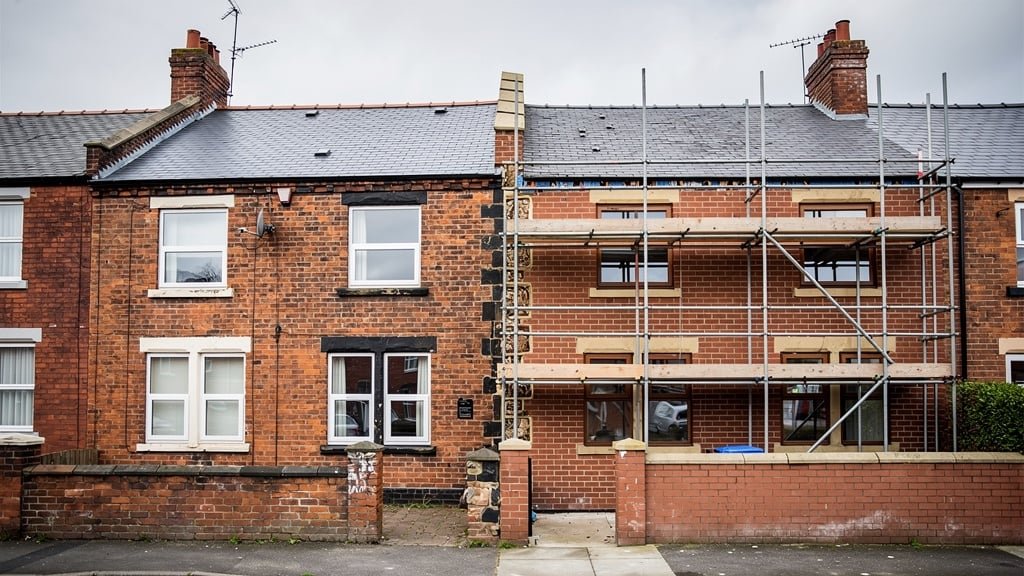
If you're planning an extension, loft conversion, or any structural work close to a boundary wall shared with a neighbour in Bolton, the Party Wall etc. Act 1996 almost certainly applies to you. Ignoring it can lead to disputes, injunctions, and costly delays — yet many homeowners in Bolton are completely unaware of their legal obligations until a dispute is already brewing.
This guide explains everything you need to know: what a party wall is, when the Act applies, how to serve notice, what a party wall agreement involves, and why instructing a qualified party wall surveyor in Bolton early is always the smartest move.
Key point: A party wall notice is a legal requirement — not optional. Failing to serve one before starting work can result in an injunction stopping your build, regardless of how far along it is.
What Is a Party Wall?
Despite the name, a "party wall" doesn't just mean the wall between two semi-detached houses. Under the Act, a party wall is defined as:
- A wall that sits on the boundary line between two properties — typically a shared dividing wall between terraced or semi-detached houses.
- A wall that sits entirely on one owner's land but is used by an adjoining owner — for example, a wall against which a neighbour's building is built.
- A floor/ceiling between flats — relevant for apartment owners in Bolton's many converted Victorian and Edwardian properties.
The Act also covers excavation work within 3 or 6 metres of a neighbouring building (depending on depth), which is particularly relevant in Bolton where many properties have older shallow foundations.
When Does the Party Wall Act Apply?
The Act applies whenever you intend to carry out any of the following works:
| Type of Work | Example | Act Applies? |
|---|---|---|
| Cutting into a party wall | Installing a beam or steel | ✔ Yes |
| Making wall thicker or higher | Raising a shared gable wall | ✔ Yes |
| Demolishing and rebuilding | Knocking down and rebuilding party wall | ✔ Yes |
| Inserting a damp proof course | DPC injection into shared wall | ✔ Yes |
| Excavating within 3m of neighbour | New extension foundations | ✔ Yes |
| New wall on the boundary line | Garden wall or outbuilding | ✔ Yes |
| Internal decorating only | Painting, wallpapering | ✘ No |
Bolton tip: Many of Bolton's terraced streets — particularly in Halliwell, Great Lever and Farnworth — have properties with shared gable walls and narrow plots. Extensions in these areas almost always trigger the Party Wall Act.
Serving a Party Wall Notice
Before any notifiable work begins, you — as the building owner — must serve a formal written notice on your adjoining owner (your neighbour). There are three types of notice depending on the work being carried out:
- Party Structure Notice: For works to an existing party wall (e.g. cutting in, raising, underpinning). Must be served at least 2 months before works start.
- Line of Junction Notice: For building a new wall on or at the boundary. Must be served at least 1 month before works start.
- 3/6 Metre Notice: For excavations close to a neighbouring structure. Must be served at least 1 month before works start.
The notice must be in writing and include your name and address, the address of the property where work is planned, a description of the proposed works, and the intended start date. Your neighbour then has 14 days to respond. If they consent in writing, you can proceed. If they dissent — or simply don't respond — a dispute is deemed to have arisen and you must appoint a party wall surveyor.
"I always advise clients to serve party wall notices as early as possible — ideally three months before they plan to start. This gives time to handle any dissent without delaying the build programme."
— James Whitfield, Lead Surveyor
What Happens If Your Neighbour Dissents?
A dissent does not mean your neighbour can stop your work. It simply triggers the formal dispute resolution process under the Act. There are two options:
- Agreed surveyor: Both parties agree to appoint a single agreed party wall surveyor who acts impartially. This is usually the most cost-effective option for straightforward Bolton extension projects.
- Two surveyors: Each party appoints their own surveyor. The two surveyors then select a third surveyor who acts as an umpire in the event of disagreement. Each owner typically pays for their own surveyor.
Whichever route is taken, the surveyor(s) will draw up a Party Wall Award — a legally binding document that sets out the rights and responsibilities of both parties, the agreed method of working, working hours, and how any damage will be assessed and remedied.
The Schedule of Condition: Why It Matters
One of the most important parts of the party wall process — and one that many Bolton homeowners overlook — is the schedule of condition. This is a detailed photographic and written record of the neighbouring property's condition before work begins.
Why does it matter? Because if your neighbour later claims that your building works caused a crack in their wall, a loose ceiling, or a damaged floor, the schedule of condition provides objective evidence of the property's pre-existing state. Without it, any crack — however old — could potentially be attributed to your works.
A schedule of condition protects both parties: it gives the adjoining owner confidence that any genuine damage will be identified and remedied, while protecting the building owner from exaggerated or spurious claims.
Costs Involved in the Party Wall Process
As the building owner, you are generally responsible for the surveyor's fees — both yours and your neighbour's in most cases. Typical costs in Bolton and the wider Greater Manchester area are:
| Appointment Type | Typical Cost | Best For |
|---|---|---|
| Agreed surveyor (single) | £700 – £1,200 | Standard extensions, one neighbour |
| Two-surveyor appointment | £1,500 – £2,500+ | Complex disputes or multiple neighbours |
| Schedule of condition only | £300 – £600 | When consent is given but record needed |
| Notice preparation & service | £150 – £350 | Add-on to full party wall service |
Where multiple adjoining owners are affected — common in Bolton's dense terraced streets — costs can increase significantly. That's why it pays to appoint an experienced party wall surveyor in Bolton early: they can often negotiate consent and avoid the full formal process.
What If You Don't Serve Notice?
Failing to serve a party wall notice is a serious mistake. While it is not a criminal offence, the consequences can be severe:
- Your neighbour can apply to a court for an injunction to stop your work immediately — even mid-build.
- You may be liable for all costs arising from the dispute, including your neighbour's legal fees.
- Without a schedule of condition, you have no baseline to dispute damage claims, however exaggerated.
- It can complicate future property sales — conveyancers routinely ask whether party wall procedures were followed.
Step-by-Step: The Party Wall Process in Bolton
Here is the full process from start to finish, as we manage it for our clients:
- Step 1 — Check if the Act applies: Review your plans against the Act's provisions or speak to a party wall surveyor for a free initial assessment.
- Step 2 — Serve the correct notice(s): Serve the appropriate written notice on all adjoining owners at least 1–2 months before works begin.
- Step 3 — Await response (14 days): If consent is given, agree a schedule of condition. If dissent or silence, appoint surveyor(s).
- Step 4 — Schedule of condition survey: Surveyor records the condition of the adjoining property before works start.
- Step 5 — Party Wall Award issued: A legally binding document sets out how works will proceed and how damage will be handled.
- Step 6 — Works proceed and post-works check: Works are carried out in accordance with the award; post-completion inspection confirms no damage.
Party Walls and Bolton's Housing Stock
Bolton's housing stock is overwhelmingly terraced and semi-detached — a legacy of the town's industrial growth in the 19th and early 20th centuries. Streets in Halliwell, Astley Bridge, Breightmet, Great Lever, and Farnworth are densely packed with Victorian and Edwardian terraces where party walls are the norm.
In these properties, the party walls are often built with lime mortar and solid brick construction — materials that can be sensitive to vibration and moisture changes caused by modern construction methods. Older properties in Bolton may also have foundations as shallow as 450mm, which means even modest excavation nearby can trigger the Act's 3-metre and 6-metre provisions.
Understanding the specific characteristics of Bolton's building stock is one reason why using a local party wall surveyor who knows the area — rather than a generic online service — makes a material difference to how smoothly the process runs.
Frequently Asked Questions
No. A dissent does not give your neighbour the right to stop your works. It simply triggers the formal dispute resolution process under the Act, which leads to a Party Wall Award setting out how the works will proceed. Only a court injunction (which requires evidence of actual harm or procedural failure) can halt works.
In most cases, the building owner (the person carrying out the work) pays both surveyor's fees. However, if the adjoining owner has caused unnecessary expense by being obstructive or unreasonable, costs can be apportioned differently by the surveyor(s).
It depends on the work. If you're raising the height of a shared wall, cutting into it to insert steel beams, or inserting a steel into the party wall as part of the structural works, then yes — the Act applies and notice must be served. A simple loft conversion that doesn't touch the party wall may not require notice, but always get professional advice first.
If you're not satisfied with the proposed works, you should dissent and appoint a surveyor. Your neighbour (as building owner) will bear the cost of your surveyor. You can raise concerns about the method of working, protection measures, and working hours. A Party Wall Award will address these concerns formally and is legally binding on both parties.
Related reading: Schedule of Condition Guide | Structural Problems in Bolton Homes | Get Free Party Wall Advice