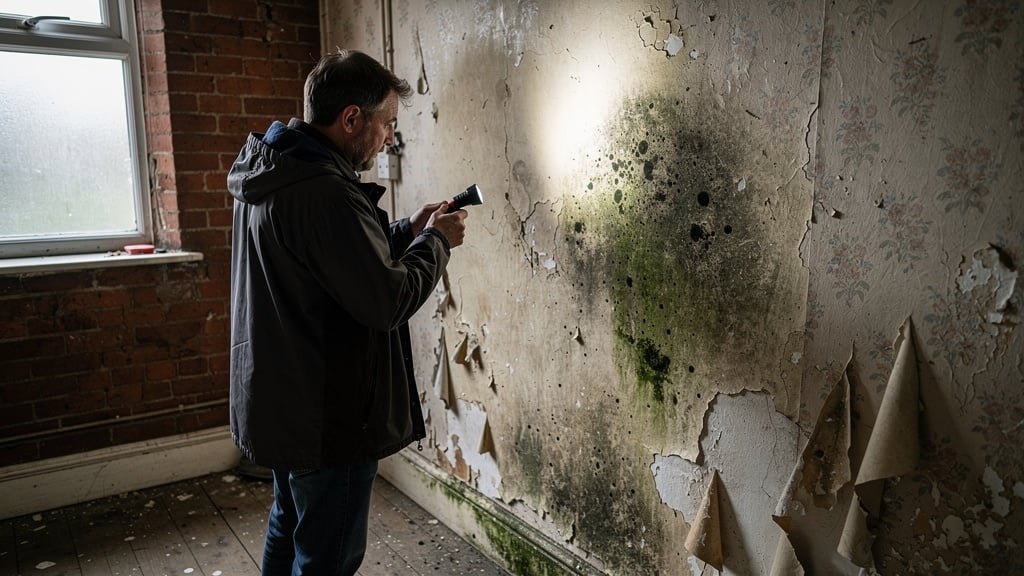
You don't need to be a surveyor to spot the warning signs of damp when you're viewing a property. With Bolton's older housing stock, damp is one of the most common issues buyers encounter — and catching it early can save you from a very expensive mistake. Here's the checklist I'd give to any buyer viewing a property in Bolton and the surrounding area.
Outside the Property: What to Look For
Start your inspection outside, even before you step through the door. The cause of most damp problems is external, and five minutes examining the outside of a property can tell you a great deal.
- Gutters and downpipes: Are they intact? Blocked? Overflowing? Look for staining on the external walls below gutters — a telltale sign of persistent overflow.
- Roof covering: Can you see any missing, slipped or cracked tiles? Valley sections or flat roof extensions in poor condition?
- Chimney stack: Look for missing or cracked pointing around the stack, deteriorated lead flashings at the base, or cracks in the brickwork.
- External walls: Any cracks? Any areas of damp staining? Render bubbling or detaching from the wall beneath?
- Ground levels: Are paths, patios or soil beds built up above the damp proof course level (typically visible as a line of different mortar about two brick courses above ground level)?
- Air bricks: Are the airbricks for the sub-floor void clear, or blocked by soil, debris or rendering? Blocked airbricks cause damp in suspended timber floors.
Inside the Property: The Full Checklist
Smell First
Before you look at anything, use your nose. A musty, earthy smell is a strong indicator of damp or mould growth — even if it's not immediately visible. Some vendors try to mask this with air fresheners or fresh paint, but it's hard to hide completely.
Lower Walls and Skirtings
- Look for tide marks — horizontal staining at a consistent height around the base of walls
- Peeling or bubbling paint or wallpaper near the skirting boards
- White salt crystallisation (efflorescence) on plaster — a sign of evaporating moisture
- Skirting boards that are soft, spongy, or show signs of rot
- Plaster that sounds hollow when tapped — it may have blown away from the wall due to damp
Around Windows and External Doors
- Condensation staining or black mould around window frames and in corners
- Rot in timber window frames
- Dampness at the sides of window reveals (the internal walls around window openings)
Ceilings
- Brown or yellow staining that suggests water ingress from above (roof leak or plumbing leak)
- Sagging or bowing plasterwork
- Signs of previous repair (fresh paint, recent plasterwork) that may be concealing a history of leaks
Bathrooms and Kitchens
- Black mould on grouting, ceilings, and in corners — often condensation-related in poorly ventilated rooms
- Soft or bouncy floor around the toilet, bath or shower base
- Damaged or missing sealant around baths, showers and sinks
The Loft (If Accessible)
- Water staining on the underside of roof timbers and sarking felt
- Daylight visible through the roof covering
- Inadequate or missing insulation that may be contributing to cold bridging and condensation
Red Flags That Should Prompt an Upgrade to Level 3
If you spot any of the following during a viewing, I'd strongly recommend upgrading to a Level 3 Building Survey rather than a Level 2 Homebuyer Report:
- Multiple areas of visible damp or mould
- Evidence of significant previous damp treatment (bare plaster on lower walls, new renders)
- Strong musty smell throughout the property
- Basement or cellar
- Property built before 1920
- Any visible structural cracking
What to Do After Your Viewing
If you've spotted any warning signs of damp during your viewing, the most important next step is to commission an independent survey before you exchange contracts. Don't rely on a mortgage valuation — it won't identify damp issues. And don't commission a free "damp survey" from a damp treatment company — they have a financial interest in finding (and treating) problems.
An independent Level 2 or Level 3 survey from a Bolton RICS surveyor will give you an honest, unbiased assessment of what you're dealing with — and what it's likely to cost to put right.
Absolutely — the more information you give us before the survey, the better. If you've noticed specific areas of concern during viewings, tell us when you book. We'll pay particular attention to those areas and, if needed, recommend the right type of investigation.