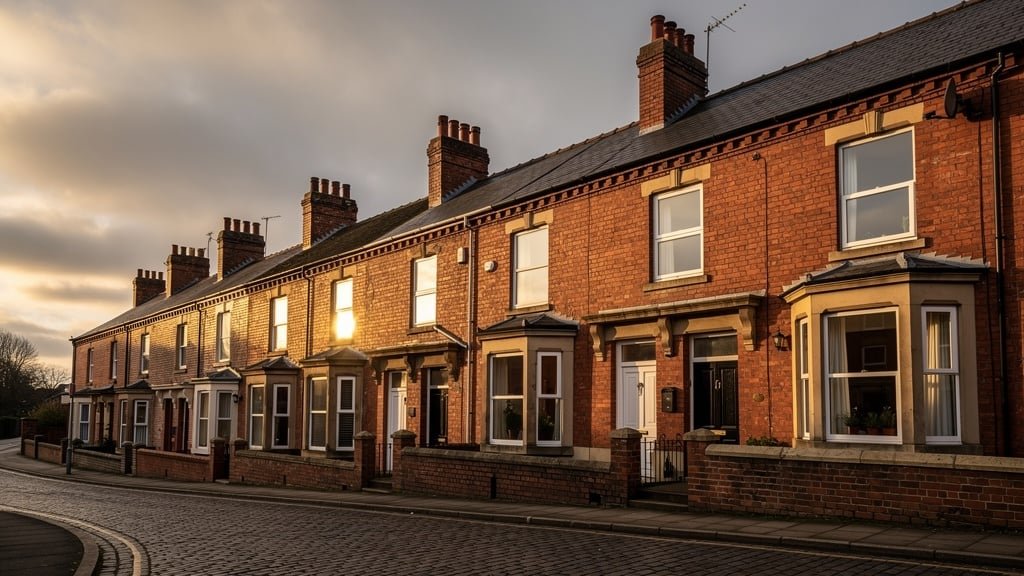
Victorian properties make up a significant proportion of Bolton's housing stock — particularly in areas like Tonge Moor, Halliwell, Astley Bridge, and the older parts of Farnworth and Horwich. They're beautiful, characterful, often spacious, and typically very affordable compared to newer builds. But they come with a unique set of surveying challenges that any buyer needs to understand before committing.
I've surveyed hundreds of Victorian properties across Bolton over the years. Here's what I've learned — and what I tell every client who's considering buying one.
What Makes Victorian Properties Different?
Victorian properties (broadly, those built between 1837 and 1901) were constructed using materials, methods and standards that are very different from modern construction. Understanding those differences is essential for anyone buying one.
- Solid brick construction: Victorian walls are typically two or more brick widths thick (solid masonry), without the cavity of modern cavity wall construction. This affects both thermal performance and damp behaviour.
- Lime mortar: Original pointing will be lime-based — softer and more flexible than modern cement. Lime mortar is actually better suited to older brickwork, but it weathers over time and needs repointing.
- No damp proof course (in most cases): Formal damp proof courses weren't widely used until the early 20th century. Many Victorian properties have either no DPC, or one that is now degraded or bridged.
- Suspended timber ground floors: The ground floors are typically suspended timber — joists above a void, with airbricks to ventilate. These require maintenance to prevent rot in the subfloor timbers.
- Original roof timbers: Often in softwood that wasn't pressure-treated (that came much later), and therefore more susceptible to rot and woodworm if moisture has been present.
The Most Common Issues I Find in Bolton Victorian Properties
Damp
Damp is by far the most common issue. Victorian properties without effective damp proof courses, combined with the North West's rainfall, can experience rising damp, penetrating damp, or both. I always test walls thoroughly with a moisture meter and assess the external fabric carefully. See our guide on damp in Bolton homes for a full explanation.
Chimney Stack Issues
Victorian properties typically have two or more chimney stacks, often serving multiple fireplaces. Stacks are high-risk elements — exposed to weather, prone to failed pointing and flashings, and often no longer maintained because the fireplaces below have been blocked. I flag chimney issues in the majority of Victorian surveys I carry out.
Old or Inadequate Wiring
Many older Bolton terraces still have partial or full original wiring — single-stranded (pre-1960s) rubber-sheathed cables, unsleeved earth conductors, round-pin sockets, and old-style fuse boxes. These represent a safety risk and require full rewiring. I flag this in every survey where I see evidence of older wiring, and recommend a full electrical inspection by a registered electrician.
Roof Covering and Structure
Original plain clay tiles or Welsh slates are typically durable, but they've had 130+ years of weathering. Valley lead flashings degrade, ridge tiles and mortar beds fail, and the original roofing felt (if present) has typically degraded long ago. Roof repairs are almost invariably required on older Victorian properties.
Subfloor Timber Condition
The suspended timber ground floor is a consistent concern in Victorian terraces. Blocked airbricks, high external ground levels, or a history of water ingress can cause rot in the floor joists and boards. In some properties I've surveyed, the subfloor timbers have been almost completely degraded — representing a significant remediation cost.
The Case For (and Against) Victorian Properties in Bolton
Why Victorian Properties Are Worth Buying
- Often significantly cheaper per square foot than equivalent modern properties
- Higher ceilings, larger rooms, more character and original features
- Solid construction that, well maintained, will last indefinitely
- Strong rental demand and resale value in the right areas
What to Budget For
If you're buying a Victorian property in Bolton that hasn't been comprehensively updated, budget for:
- Full or partial rewiring: £3,000–£8,000+
- New central heating system (if not already present): £3,000–£6,000
- Roof repairs or partial re-covering: £2,000–£10,000+
- Chimney repairs: £500–£3,000
- Damp remediation (if genuine): £1,000–£5,000+
- Window replacement (single to double glazed): £3,000–£8,000+
Not every Victorian terrace will need all of this — but you should budget accordingly and use your survey to establish exactly what's needed.
Why You Need a Level 3 Survey for a Victorian Property
I'm going to be direct: for a Victorian property in Bolton, a Level 3 Building Survey is almost always the right choice. The complexity of older construction, the potential for hidden defects, and the need for repair cost guidance all point to the more comprehensive option.
A Level 2 Homebuyer Report will identify the main visible issues, but it won't give you repair cost guidance, and it may not go into sufficient depth on structural matters. For a property that could have significant issues, that depth is exactly what you need.
Standard Victorian terraces are not generally hard to mortgage or insure. However, some mortgage lenders will decline properties in very poor condition. Unusual construction (e.g. very early thatched roofs, or properties with known structural issues) can sometimes cause difficulties. A survey report that identifies specific issues may need to be addressed before a lender will proceed.
It can be excellent value — if you go in with your eyes open. An unrenovated Victorian terrace in a good part of Bolton, bought at the right price with a clear understanding of the works required, can be a genuinely rewarding investment. The key is having a thorough survey that tells you exactly what you're taking on before you commit.