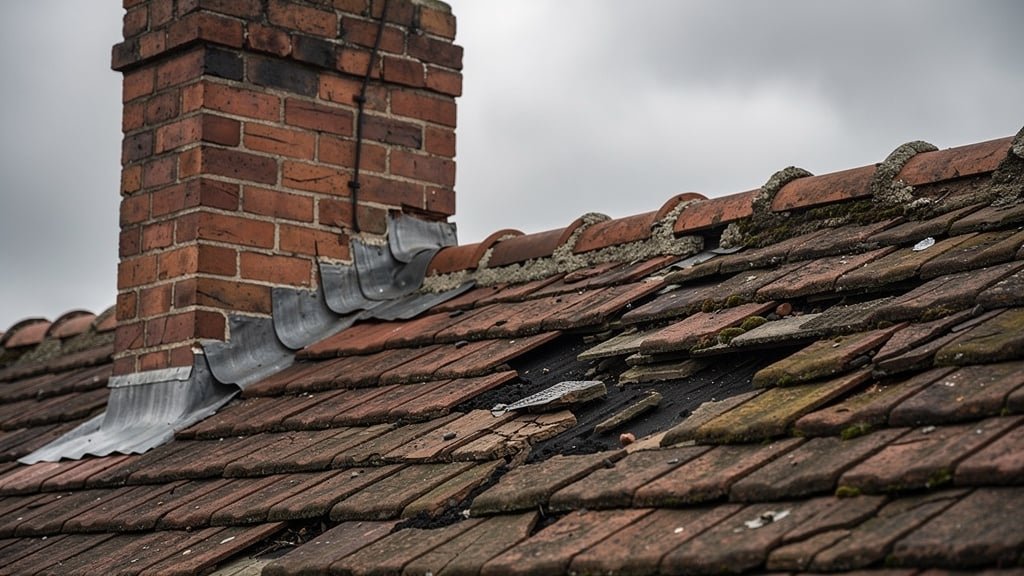
Bolton's weather is unforgiving. Sitting on the western edge of the Pennines, the town receives significantly more rainfall than much of England — and its housing stock, predominantly built between 1880 and 1970, reflects the cumulative toll that a century of rain, frost, and wind can take on a roof. In our experience surveying properties across Bolton, the roof is one of the most consistently problematic areas in local homes — and one of the most expensive to repair if problems are left undetected.
Whether you're buying a Victorian terrace in Halliwell, a post-war semi in Westhoughton, or a 1980s detached in Horwich, this guide explains the most common roof defects we encounter in Bolton properties, why they occur, how much they cost to fix, and — critically — how a professional building survey identifies them before you commit to a purchase.
Key fact: In a recent analysis of our Bolton survey reports, roof-related defects were the most frequently identified issue, appearing in over 68% of surveys on pre-1960 properties. Of these, nearly one in four required urgent attention.
Why Bolton Roofs Are Particularly Vulnerable
Before diving into specific defects, it's worth understanding why Bolton's roofs face particular challenges:
- Rainfall: Bolton receives around 1,100mm of rain per year — nearly double the UK average. This places sustained pressure on all waterproofing elements, from tiles and flashings to gutters and downpipes.
- Age of housing stock: The majority of Bolton's housing was built before 1945, using materials and techniques that have a natural lifespan. Original Welsh slate, hand-made clay tiles, and lime-mortar ridge pointing all require ongoing maintenance and periodic replacement.
- Frost action: Bolton's elevation means freeze-thaw cycles are common. Water penetrating cracked tiles, mortar, or flashings freezes overnight and expands, accelerating deterioration.
- Neglect and DIY repairs: Many roof problems we encounter in Bolton are the result of well-intentioned but technically inadequate DIY repairs — overapplication of roofing cement, incorrect tile replacement, or poorly executed lead flashing.
Defect 1: Slipped, Cracked, or Missing Roof Tiles
This is the most visible and most common roof defect we find in Bolton properties. Tiles slip when the nibs — the fixing lugs — break due to age or frost damage, or when the timber battens beneath them rot. Once a tile slips or breaks, the underlayment (sarking felt) is exposed to driving rain, and if the felt has also degraded (common in pre-1970 properties), water can penetrate directly into the roof space.
| Repair Type | Typical Cost | Urgency |
|---|---|---|
| Minor tile repairs (1–5 tiles) | £150–£400 | Medium |
| Partial re-roofing (one slope) | £1,500–£4,000 | High |
| Full re-roof (terraced/semi) | £5,000–£14,000 | Urgent |
How surveys catch it: A surveyor will carry out a visual inspection of all roof slopes from ground level using binoculars and, where accessible, from within the loft space. In the loft, we look for daylight penetrating through the tile line, water staining on the rafters, and degraded or split sarking felt. We also check whether the existing felt is the original bituminous type (which degrades after 30–40 years) or a modern breathable membrane.
Defect 2: Failed Ridge and Hip Mortar
The ridge is the apex of the roof — the horizontal line at the very top where the two slopes meet. Ridge tiles are traditionally bedded in mortar, and over time (particularly after frost cycles), this mortar cracks and falls away. Loose ridge tiles are both a water ingress risk and a safety hazard — a dislodged ridge tile falling onto a person or vehicle is a serious liability.
In Bolton, we frequently find ridge mortar that has been "over-pointed" multiple times — layer upon layer of cement mortar applied over decades, which has now cracked throughout and is holding ridge tiles only by adhesion. Hip tiles (where two slopes meet at an external corner) suffer the same deterioration.
"Ridge and hip mortar failure is one of those defects that looks minor from the street but can have serious consequences. A dislodged ridge tile in a Bolton winter storm is a genuine safety hazard — and the water ingress it allows can cause thousands of pounds of hidden damage before anyone notices."
— Sarah Pendleton, MRICS
How surveys catch it: Ridge and hip mortar failure is typically visible from ground level with careful inspection. In our reports, we grade ridge condition from "satisfactory" through "requires monitoring" to "urgent attention required" — loose ridge tiles always receive our highest priority rating. The solution is either re-pointing with fresh mortar (£300–£700) or full ridge re-bedding using mechanical fixing (£800–£2,000).
Defect 3: Defective Lead Flashings
Flashings are strips of metal — ideally lead — that seal the junction between the roof and any vertical surface: chimneys, dormer walls, roof windows, and parapet walls. When flashings fail, water runs directly behind the roof covering and into the building fabric, often causing significant damage that is invisible from the outside for years.
In older Bolton properties, we commonly find:
- Lead flashings that have been painted over — restricting movement and causing cracking.
- Lead replaced with mortar fillets — a common but inadequate repair that fails within years.
- Aluminium or zinc flashings installed as a cheap alternative — with a much shorter lifespan than lead.
- Step flashings at chimney bases that have lifted — allowing water to track down the chimney stack and into the roof.
How surveys catch it: Flashings are examined closely both externally and from within the loft space. Staining on the chimney breast wall, damp patches on the ceiling below, and discolouration of loft insulation below the chimney are all tell-tale signs of flashing failure that a trained eye will identify.
Defect 4: Blocked or Damaged Gutters and Downpipes
This may seem like a minor issue, but in Bolton's rainfall conditions, blocked gutters are among the most frequent causes of penetrating damp in older properties. Gutters blocked with moss, leaves, or debris overflow during heavy rain — and the water runs down the face of the wall, saturating the masonry and eventually penetrating interior spaces.
We also regularly find original cast-iron gutters and downpipes that have cracked, corroded, or separated at the joints. Cast iron was the standard material in Bolton's pre-war housing and can last 100 years with maintenance — but neglected cast iron deteriorates rapidly and replacement is expensive (£60–£120 per linear metre installed).
How surveys catch it: Gutter and downpipe condition is assessed during the external inspection. Signs of gutter failure — green algal staining on walls below the gutter line, salt crystallisation (efflorescence), and damp patches at the tops of ground-floor walls — are often more obvious than the gutter problem itself and will be flagged in the survey report.
Defect 5: Flat Roof Deterioration
Flat roofs are the Achilles heel of many Bolton properties — particularly on rear extensions, garages, bay window tops, and 1960s–1980s additions. Traditional felt flat roofs have a lifespan of only 10–15 years, yet we regularly survey properties in Bolton where the flat roof is clearly 25–30 years old and well past replacement.
Common signs of flat roof failure include:
- Blistering and cracking of the felt surface — caused by thermal movement and UV degradation.
- Ponding water — flat roofs should have a slight fall; ponding indicates either inadequate falls or structural deflection.
- Daylight visible through the covering — splits or holes in the felt membrane.
- Damp ceilings below the flat roof area — the most common presenting symptom, often misidentified as condensation.
How surveys catch it: Flat roofs are inspected visually from ground level and, where safe and accessible, at closer range. Internally, ceiling staining is investigated and the surveyor will use a damp meter to test for moisture. Replacement of a standard rear extension flat roof in Bolton typically costs £1,500–£4,500 depending on size, specification, and whether GRP (fibreglass) or a torch-on felt system is used.
Defect 6: Chimney Stack Problems
Chimney stacks are among the most exposed elements of any Bolton property. Standing above the roofline, they are subject to the full force of Pennine weather — and they require regular inspection and maintenance. In our survey experience, the majority of chimney stacks in pre-war Bolton properties show some degree of deterioration.
Common chimney defects we find in Bolton include:
- Spalling brickwork — frost action causing the face of bricks to break away, exposing the softer inner brick.
- Cracked or failed chimney pots and flaunching — the mortar bed securing the pots at the top of the stack.
- Uncapped redundant flues — allowing rainwater to enter and saturate the chimney breast internally.
- Leaning or bowing stacks — in severe cases, indicating structural failure at the base of the stack.
How surveys catch it: Chimney stacks are inspected using binoculars from multiple ground-level positions. Signs of damp penetration — staining on chimney breast walls, peeling wallpaper, damp plasterwork — are noted and corroborated with internal damp meter readings. Repointing a chimney costs £300–£800; full chimney stack rebuilding can cost £2,500–£6,000+.
Defect 7: Inadequate Roof Space Ventilation
Condensation in the roof space is increasingly common in Bolton properties where energy efficiency improvements — loft insulation, draught-proofing, double glazing — have reduced air movement within the building. Warm, moist air from living spaces rises into the roof void and, if inadequately ventilated, condenses on the cold underside of the roof covering and on timber members.
Over time, this condensation causes:
- Mould growth on roof timbers — particularly rafters and wall plates.
- Saturation of loft insulation — dramatically reducing its thermal effectiveness.
- Premature deterioration of sarking felt — with interstitial condensation trapped between the felt and tiles.
How surveys catch it: The loft space inspection is one of the most valuable elements of a building survey. We physically enter the loft (where access is available) and examine roof timbers, insulation, felt condition, and ventilation provision. Surface mould on timbers, staining from historic water ingress, and excessive condensation are all recorded and reported. Installing adequate ridge and eaves ventilation typically costs £400–£1,200.
Defect 8: Roof Timber Deterioration
In cases where water ingress has gone unchecked for many years, the roof timbers themselves — rafters, purlins, ridge boards, and wall plates — can deteriorate significantly through wet rot or, in more serious cases, woodworm or dry rot. In Bolton's Victorian terraces, original softwood timbers may be over 120 years old; while well-maintained timber of this age can be structurally sound, neglected timbers can be dangerously compromised.
We occasionally survey properties where sagging between rafters is visible from outside as an undulation in the tile line — a clear sign that either the rafters have deflected under load, or that the counter battens have failed.
How surveys catch it: Roof timbers are probed for softness (indicating wet rot) using a surveyor's probe during the loft inspection. Woodworm activity is identified by the presence of live exit holes. Any suspicion of active dry rot — identified by its distinctive smell and fruiting bodies — triggers a recommendation for specialist investigation. Timber treatment costs from £500; structural roof repairs can run to several thousand pounds.
What Happens When the Survey Finds Roof Problems?
Discovering significant roof defects in a survey is not necessarily a reason to walk away from a Bolton property. It is, however, a powerful negotiating tool. Armed with a clear survey report, you can:
| Your Option | What It Means |
|---|---|
| Negotiate a price reduction | Use estimated repair costs from the report to renegotiate the purchase price |
| Request pre-completion repairs | Ask the vendor to carry out specified repairs before completion as a condition of sale |
| Budget accurately | Proceed at the existing price but budget properly for roof works in year one |
| Walk away | Where defects are severe and the vendor won't negotiate, withdraw and protect your finances |
Why a Mortgage Valuation Is Not Enough
Many Bolton buyers mistakenly believe that the mortgage valuation their lender commissions will identify roof problems. It won't. A mortgage valuation is a brief desktop exercise — sometimes lasting under 30 minutes on site — designed to confirm that the property is adequate security for the lender's loan. It is not a survey. It does not check the loft, test for damp, or inspect the roof covering in any detail.
The mortgage valuation report explicitly states that it should not be relied upon by the buyer for information about the property's condition. Only a RICS Level 2 or Level 3 survey — carried out on your instruction, for your benefit — gives you that assurance.
Frequently Asked Questions
Yes — a Level 2 Homebuyer Report includes an inspection of the roof space where it is safely accessible. The surveyor will enter the loft hatch, examine the visible timbers, insulation and felt, and test for moisture. However, a Level 3 Building Survey involves a more detailed structural analysis of roof timbers and is more appropriate for older or complex properties.
A Level 3 Building Survey includes indicative repair cost estimates for significant defects. These are professional estimates based on current market rates and the surveyor's experience — not formal contractor quotes. You should obtain at least two contractor quotes before proceeding with any work. A Level 2 survey flags defects but does not always include cost estimates.
Once contracts are exchanged, you are legally committed to the purchase. This is exactly why commissioning a thorough survey before exchange is so important. If you discover roof problems after exchange but before completion, your options are limited — you would need to negotiate with the vendor from a position of legal obligation. Always instruct a survey well before exchange of contracts.
It depends on the material. Modern concrete interlocking tiles typically last 30–50 years; traditional clay tiles can last 60–100 years if maintained; Welsh slate can last over a century. The key factors are maintenance history, quality of installation, and the severity of local weather conditions. In Bolton's climate, maintenance intervals are generally shorter than in drier parts of the UK. A surveyor will assess the remaining serviceable life of the roof covering as part of their inspection.